

Motion control systems precisely control speed, acceleration, position, and torque in automated systems. A typical motion control system includes a controller, drive, motor, and feedback device that seamlessly work together to enable complex machine movements.
This blog explores motion control system basics and dives into key motion control components and how to implement them to develop an efficient and effective motion control solution.
At Accu Tech USA, we work with customers to design custom linear motion and integrated motion systems that reduce cost at every stage of the machine lifecycle.
What is Motion Control Technology?
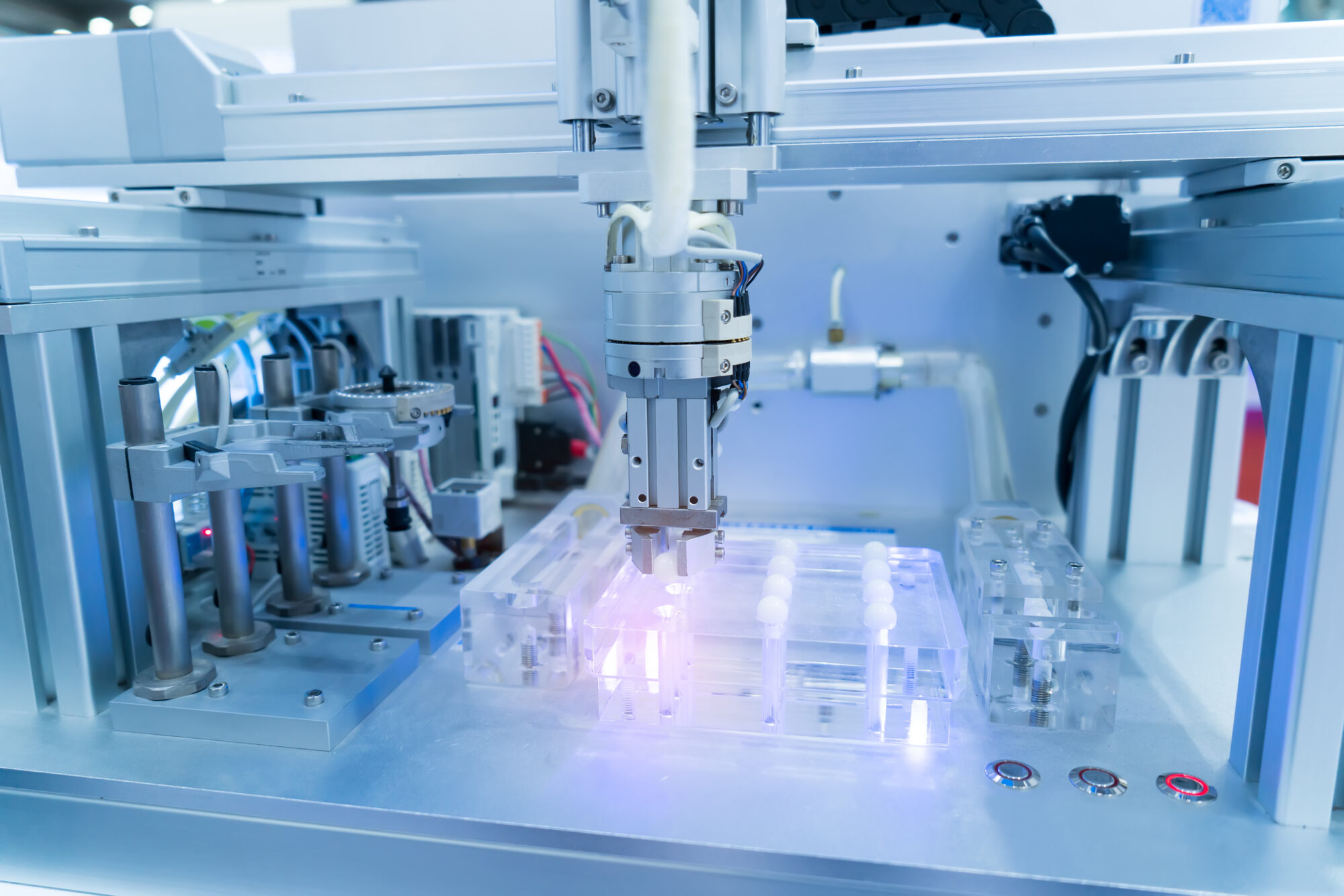
Motion control is a subset of automation technology that controls the movement of individual parts of a machine or device. Motion control systems monitor and tightly control speed, position, and force, ensuring components stop when required. Making motion control essential when precise and accurate motion is critical in an application.
Accu Tech USA helps identify where complexity can be engineered out of your motion system. Let’s Get Started!
The Role of Essential Motion Control Components
Most motion control systems are composed of four key components – a motion controller, a motor drive, a motor, and feedback devices – that each play a key role in creating accurate, repeatable motion.
- Motion controller: Based on a defined motion profile, the motion controller creates the trajectory for the motor and commands the motor drive to move at a precise speed until it reaches the specified target.
- Motor drive: The motor drive receives the signal from the motion controller and delivers voltage and current to the motor to activate motion.
- Motor: The motor receives input from the drive and, based on that input, converts electrical energy into mechanical energy to produce the torque needed to move the machine component to the target.
- Feedback device: In a closed-loop motion control system, feedback devices, such as encoders, send real-time data regarding position, velocity, direction, or acceleration back to the controller. The controller uses this data to make necessary adjustments, ensuring precision and accuracy. Closed-loop motion control systems are essential for applications that require precise, tight control. Open-loop motion control systems do not have feedback devices, so they run through the process until completion and may not be as precise or repeatable.
How Does Motion Control Work? Putting it All Together
Programmed with a specific motion profile that dictates parameters, such as speed, acceleration, direction, torque, and position, a motion control system continuously adjusts the motor’s operation to achieve the defined sequence of movements.
However, the performance of a motion control system is only as good as the sum of its parts. For optimal precision and efficiency, selected components must work seamlessly together and align with the demands of the application.
An Accu Tech USA can help engineer motion systems that fit where standard products cannot. Contact us to learn more!
6 Steps to Implementing a High-Performance Motion Control System
- Define the motion profile: Based on the specifications of the application, determine the motion parameters, including speed, torque, and position.
- Choose the mechanical components: Select the motor and drive that best suit the application and work well together. For example, servo drives and servo motors are usually used in applications that demand high precision.
- Create a feedback loop: To enable precision and repeatability, install encoders or other feedback devices on the system’s mechanical components.
- Program the controller: Choose a PLC or standalone motion controller that meets the requirements of the application and configure it to support the desired motion profile.
- Configure the drive: Set parameters on the drive to match the motor and mechanical load.
- Tuning: Optimize the control loop to achieve the desired speed and accuracy.
Tips for Developing an Efficient Motion Control System
Understand Your Application
Before developing a motion control system, determine exactly what you need the system to do. Start with the performance goals, such as the required precision, repeatability, and torque. Then consider the load and motion profile, including the necessary speed and acceleration. Once you’ve defined the application and its unique specifications and conditions, it’s easier to select compatible components.
Select a PLC or Standalone Controller
The motion controller manages the motion of the system, so if it’s not suitable for the application, the performance of the entire system will suffer. Most motion control systems use either a PLC or a standalone motion controller.
PLCs are designed to be robust enough for industrial applications, simple to use, and flexible. They are often applied in systems that require sequential logic or low-axis motion. Standalone motion controllers offer very precise control, so they are typically used in applications that demand complex, multi-axis motion, such as shape cutting or precision robotics.
When selecting a controller, consider how it coordinates motion requirements, the provided level of precision, whether it’s best for controlling low- or multi-axis motion, the programming language, and available communication options. Select the controller that best meets the needs of your application and the experience level of your plant personnel.
Match the Motor to the Application
Selecting the most suitable motor for the application will provide better performance and efficiency. AC, DC, stepper, and servo motors are all solid options.
AC motors are robust and low-maintenance. They provide precise speed, adjustable torque, and precise acceleration and position control.
Brushed DC motors offer excellent torque at low speeds and are low-cost, but require frequent maintenance because the brushes wear out. Brushless DC motors are more energy efficient than brushed motors and have fewer maintenance requirements, but can be difficult to control.
Stepper motors excel at precise positioning and speed control. They provide excellent torque at low speeds and are suitable for applications that demand high holding torque. However, torque is limited at higher speeds, they are less energy efficient, and may be prone to overheating.
Servo motors provide closed-loop feedback, so they offer the highest positioning accuracy, making them the choice for advanced, high-precision motion control applications, such as 3D printing and CNC machines.
Enlist an Expert
A well-designed motion control system is essential to achieving a precise, repeatable motion profile. However, selecting and integrating motion control components for an application can be a challenging process.
At Accu Tech USA, we develop motion solutions that provide superior performance, energy efficiency, and long-term value. As a Tavoron company, we have the knowledge, experience, and nationwide support to help you implement a highly effective and efficient motion control system. Take the complexity out of motion control.
Contact us for assistance with component selection and system design.